



































Water Pumps: How They Work, What the Key Parameters Mean, and How to Verify Them
A practical guide to water pump working principles, functional parameters, and compatibility boundaries, with a hypothetical comparison scenario and an actionable verification checklist.
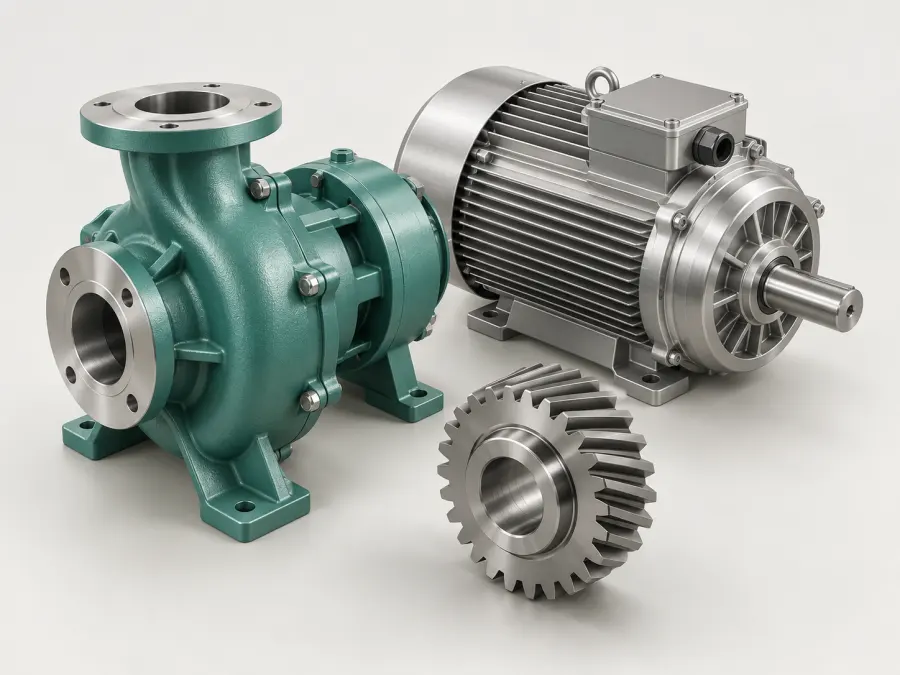
Water pumps are mechanical devices that convert rotational or reciprocating energy into fluid movement. Understanding how a specific pump moves water, and what its rated parameters actually describe, is the foundation of any sourcing decision. This article focuses on the product itself: how it works, what the numbers on a datasheet mean, and where its compatibility boundaries lie.
How a Water Pump Moves Water
Most pumps used in buildings, agriculture, and light industry fall into two broad families. Centrifugal pumps use a rotating impeller to throw water outward into a casing, converting velocity into pressure. They are best suited to clean or lightly contaminated water and generally produce high flow at moderate head. Positive displacement pumps, including self-priming and many sewage pump designs, trap a fixed volume of liquid and push it through with each cycle. They can handle air slugs, viscous liquids, or solids depending on the design, and they tend to maintain flow against higher resistance.
A self-priming pump is not a separate physical principle; it is a centrifugal or displacement pump configured with a priming chamber or valve arrangement so that it can evacuate air from the suction line on start-up. A sewage pump is built with a wider passage, a different impeller profile, and often a cutting or vortex mechanism to pass soft solids. These functional differences matter more than the label on the box.
Reading the Key Parameters
Flow rate is the volume delivered per unit time, usually expressed in cubic metres per hour or litres per minute. It is not a fixed number: it changes with the total head the pump must overcome. Head is the height to which the pump can lift water plus the friction losses in pipes, fittings, and valves. A pump rated at a certain maximum head will deliver near-zero flow at that height, and its maximum flow occurs at near-zero head. The practical operating point is somewhere between these extremes.
Suction lift is the vertical distance from the water surface to the pump inlet. It is limited by atmospheric pressure and by the pump's ability to create a vacuum. Exceeding the rated suction lift is one of the most common causes of poor performance. Power rating, voltage, phase, and frequency must match the available electrical supply. Inlet and outlet sizes must match the pipework; a pump with a smaller outlet than the system piping will force the operating point away from its design range.
Compatibility Boundaries
A pump is only one part of a system. The liquid being pumped must be compatible with the materials of the impeller, casing, seals, and valves. Clean water, abrasive slurry, and chemically active liquids place very different demands on a pump. Temperature limits affect seal life and material choice. Solids handling capability is defined by the maximum particle size the pump can pass without clogging. Duty cycle matters: a pump rated for intermittent operation may not be suitable for continuous service.
Hypothetical Comparison Scenario
Suppose a buyer needs to move water from a storage tank to an irrigation line. Option A is a self-priming centrifugal pump with a rated flow of 20 cubic metres per hour at 20 metres of head, a suction lift limit of 8 metres, and a 2-inch inlet and outlet. Option B is a sewage-type pump with a rated flow of 15 cubic metres per hour at 15 metres of head, a 3-inch outlet, and a stated solids passage of 35 millimetres. The tank is 4 metres below the pump, the irrigation line requires about 12 metres of head, and the water is clean but may contain leaves. Option A fits the clean-water duty and the available suction lift. Option B has more solids tolerance but lower head and flow at the required duty point. The buyer would compare the pump curve, not just the headline flow figure, and would confirm that the suction lift and pipe sizes match the installation.
Verification Checklist
Before accepting a pump, confirm the nameplate data against the order: model, flow, head, power, voltage, frequency, speed, inlet and outlet size, and maximum suction lift. Check that the pump curve supplied matches the intended operating point. Inspect the impeller, casing, and seal materials for the intended liquid. Verify that the suction and discharge connections match the pipework. Confirm the direction of rotation and the electrical connection arrangement. For self-priming and sewage models, check the priming chamber and solids passage dimensions. Where the pump will be used in a regulated application, such as drinking water or a hazardous location, specialist review of the applicable standards and certification requirements is necessary; the supplier's general product description is not a substitute for that review.
A pump that is correctly matched to its system will operate near its design point, with stable flow, reasonable power draw, and acceptable seal life. A pump that is not will often still run, which is why parameter verification before installation is more reliable than performance complaints afterward.
Share the product, specifications, quantity and destination to discuss sourcing options.