


































The small moving hook on a steel tape measure
A tape blade, end hook, lock and case form a measuring assembly. Inspect the parts together before approving the sample.
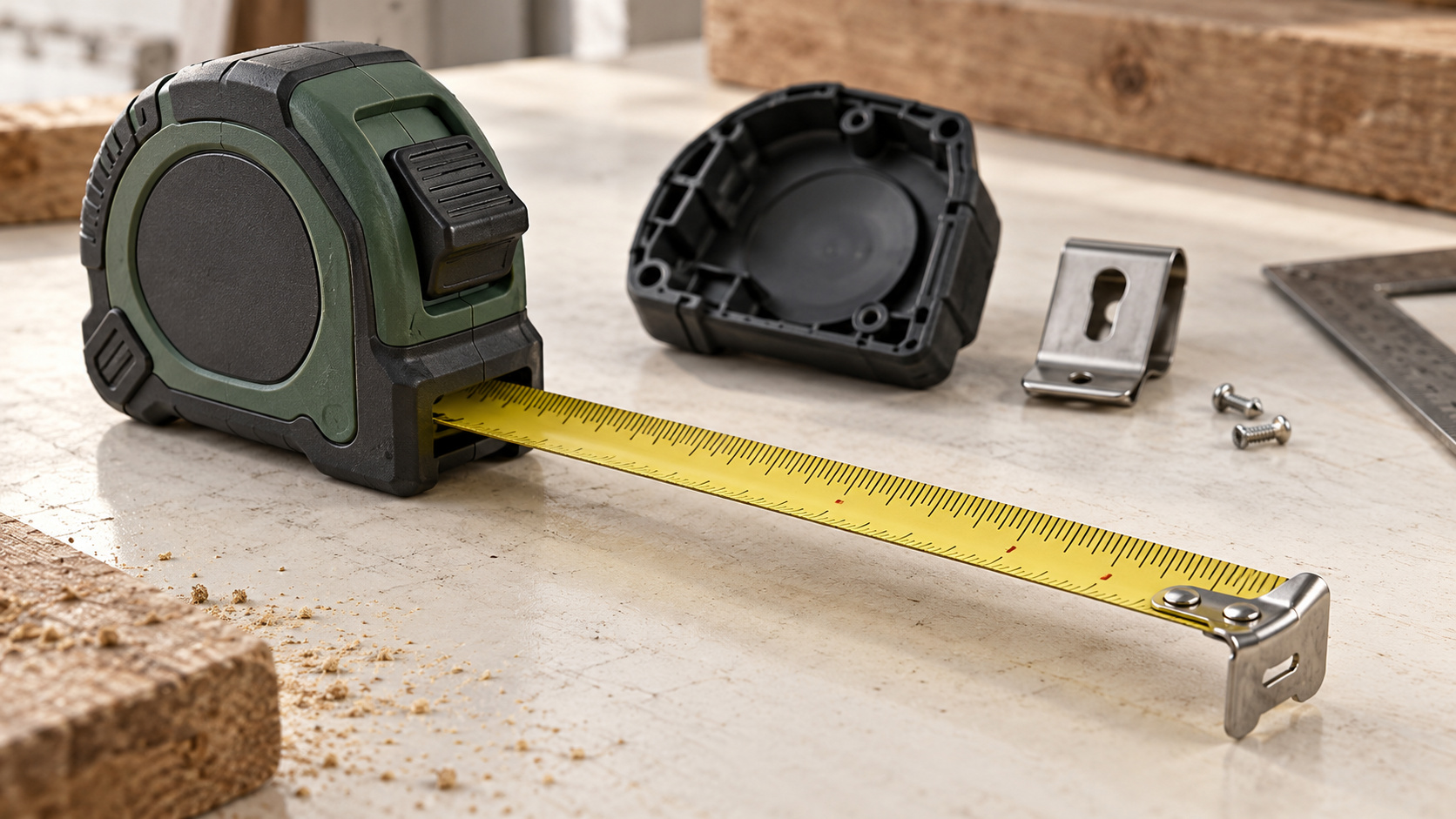
The hook on the end of a steel tape measure can move a little on its rivets. It is tempting to call that a loose part and ask the factory to tighten it. I would first ask which hook design is being supplied. On a floating-hook design, the movement has a purpose: it allows for hook thickness when changing between inside and outside measurements. Stanley describes that feature for its TRU-ZERO hook. It should not be confused with unexplained looseness on any hook that happens to move.
For a sourcing brief, I would want a close photograph of the proposed hook and rivets, together with the supplier's description of the intended movement. Then I would look at the finished measuring assembly. Are the hook, printed scale and blade end the same versions as the approved sample? A change to one of them deserves another look at the measurement check. Counting the rivets is not enough to settle it.
The blade itself brings another set of choices. I would lay a section of the blade on the bench and look along it, with the supplier's description open beside it. Which width and section shape belong to this model? What steel and coating references are being offered? I would write those answers beside the sample number. A different yellow print would be a separate discussion from a proposed change of blade material.
I would examine the numbers on the actual blade, not just on a print file. Look at the scale near the hook and further along the tape. Check the proposed units, the smaller divisions and the readability of the markings. A catalogue description such as “clear scale” leaves quite a lot for the buyer to decide later. The retained sample should show which printing and finish were accepted.
The lock needs to be tried with that blade inside that case. There are designs that hold the blade automatically and designs where the user operates a lock. Before trying it, I would read the operating and retraction instructions supplied with that model. Then I could compare the described locking action with the sample. Fingers should stay out of the blade path, and the tape should be guided back as instructed rather than released to snap back.
For the case, I would ask about the shell material and any softer outer sections. A soft-looking surface in a photograph does not tell me how much of the body is covered or whether the belt clip and screws are included. Set the complete sample beside its parts description. If a promotional version will carry a logo, check the placement on that same case rather than approving artwork against a different model.
I would finish by keeping the parts description, sample and measurement-check record together. The blade coating, end-hook version, locking action and case construction should each have an identifiable answer. If the factory later proposes a replacement hook or another blade, it becomes possible to ask what needs checking again. Without that record, a visibly small substitution can disappear inside an order for what looks like the same tape measure.
Share the product, specifications, quantity and destination to discuss sourcing options.