


































Tackle Boxes: Choose the Inner Trays Before the Outer Case
Build a storage-box assortment around the trays and tackle it must hold, then check the outer case with those actual components.
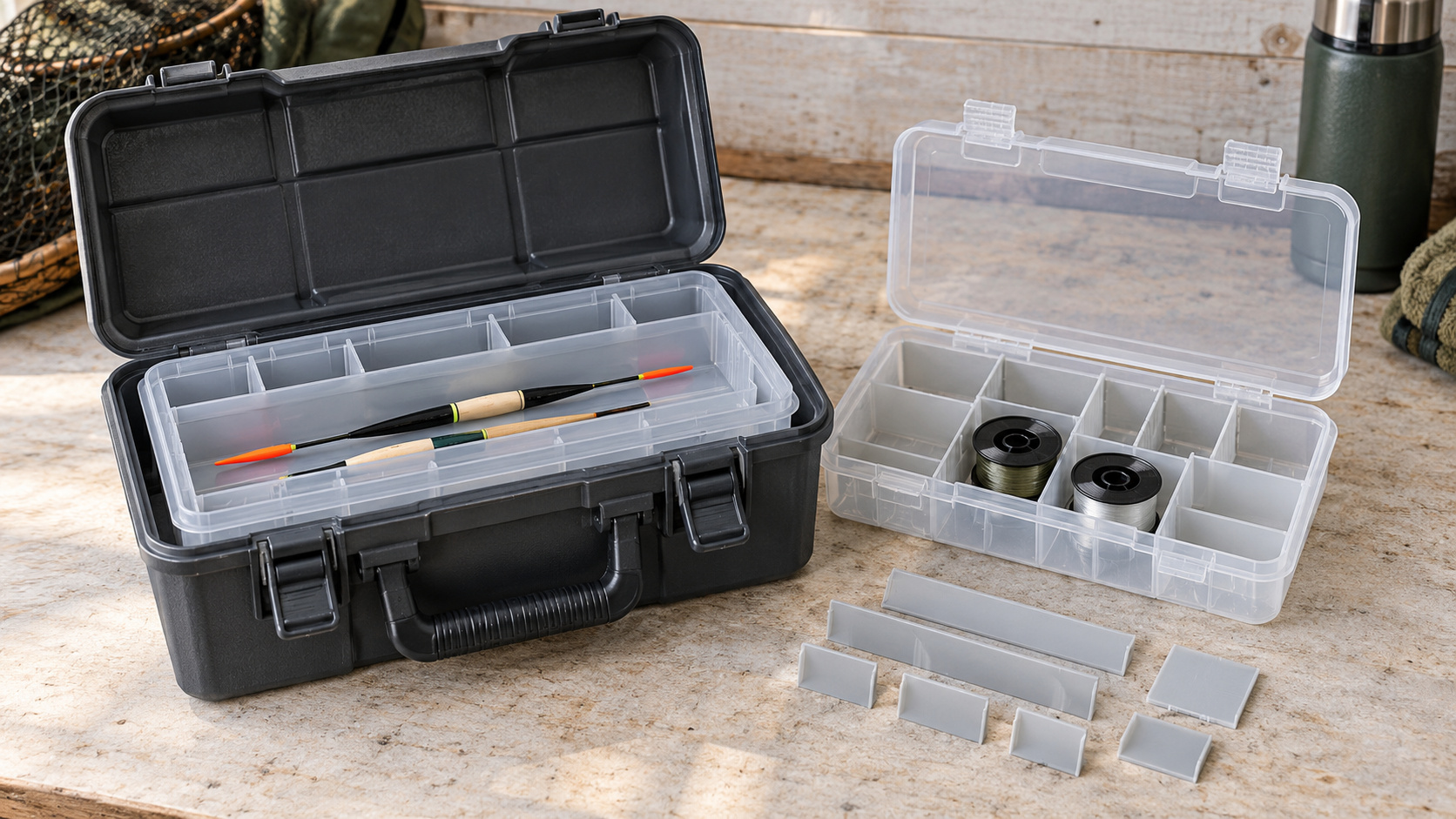
For a hard tackle case with removable inner boxes, I would choose the inner boxes before deciding which outer case to stock. The broad outline of a case can look convincing in a catalogue photograph, but I would want to know what could be arranged inside it. A long float, a spool and a divided box of small accessories ask for different spaces. I would begin with a list of the intended contents and the proposed inner-box layout, then work outwards to the case that holds it.
The samples for that comparison would need to be specific. I would ask for the actual tray or inner box offered with each case, with its dividers and lid in place. Then I would check the intended contents against the usable compartments, including their depth. I would keep measurements of the objects with the sample notes. Choosing an inner box by its external length alone could leave the dividing walls or lid shape out of the comparison. Meiho's published inner-dimension comparison for its own cases is a useful example of why internal space deserves a separate look; its figures would not describe another supplier's box.
For an assortment intended to hold long floats, I would want to see where the uninterrupted space was. A photograph with the removable dividers taken out would help, but I would also ask which walls were fixed. For small swivels or other loose accessories, I would look at the divided layout and ask how the partitions were retained. These would be different reasons for selecting a layout. I would describe the proposed contents alongside the layout rather than use the number of compartments as the only selling distinction.
Next I would put the selected inner boxes into the proposed outer case. I would check the arrangement with the lids closed and the handle in the position used for carrying. Could an inner box be taken out without first lifting the whole stack? Where would the loose items sit? If a removable top tray were included, I would want to see what space remained below it. I would ask for photographs of that actual arrangement, instead of infer capacity from an empty outer shell. Any demonstration of carrying would need to stay within the manufacturer's instructions and stated limits.
The retail bundle would follow that checked arrangement. If the photograph showed several inner boxes, I would confirm which ones were included and which were optional accessories. I would keep the inner-box references and quantities with the case reference. An alternative bundle using the same outer case could then be described by its different contents, rather than given a new name that hid the shared case. For replacement inner boxes, I would retain the compatibility information confirmed for the supplied version.
If I were launching a small range, I would start with a clearly explained choice of layouts rather than a row of similar-looking cases. One might suit the specified long items and another the planned divided storage, provided the samples supported those descriptions. The listing photographs would show the included arrangement as well as the closed case. I would keep the layout photographs with the buying notes so that a later reorder, or a change to a divider or tray, could be checked against what the shop had actually offered.
Share the product, specifications, quantity and destination to discuss sourcing options.