


































Include the Phone Case in a Car Holder Sample Check
Define the intended phone-and-case combination, then record the holder variant, contact points and supplied mounting parts during an agreed sample review.
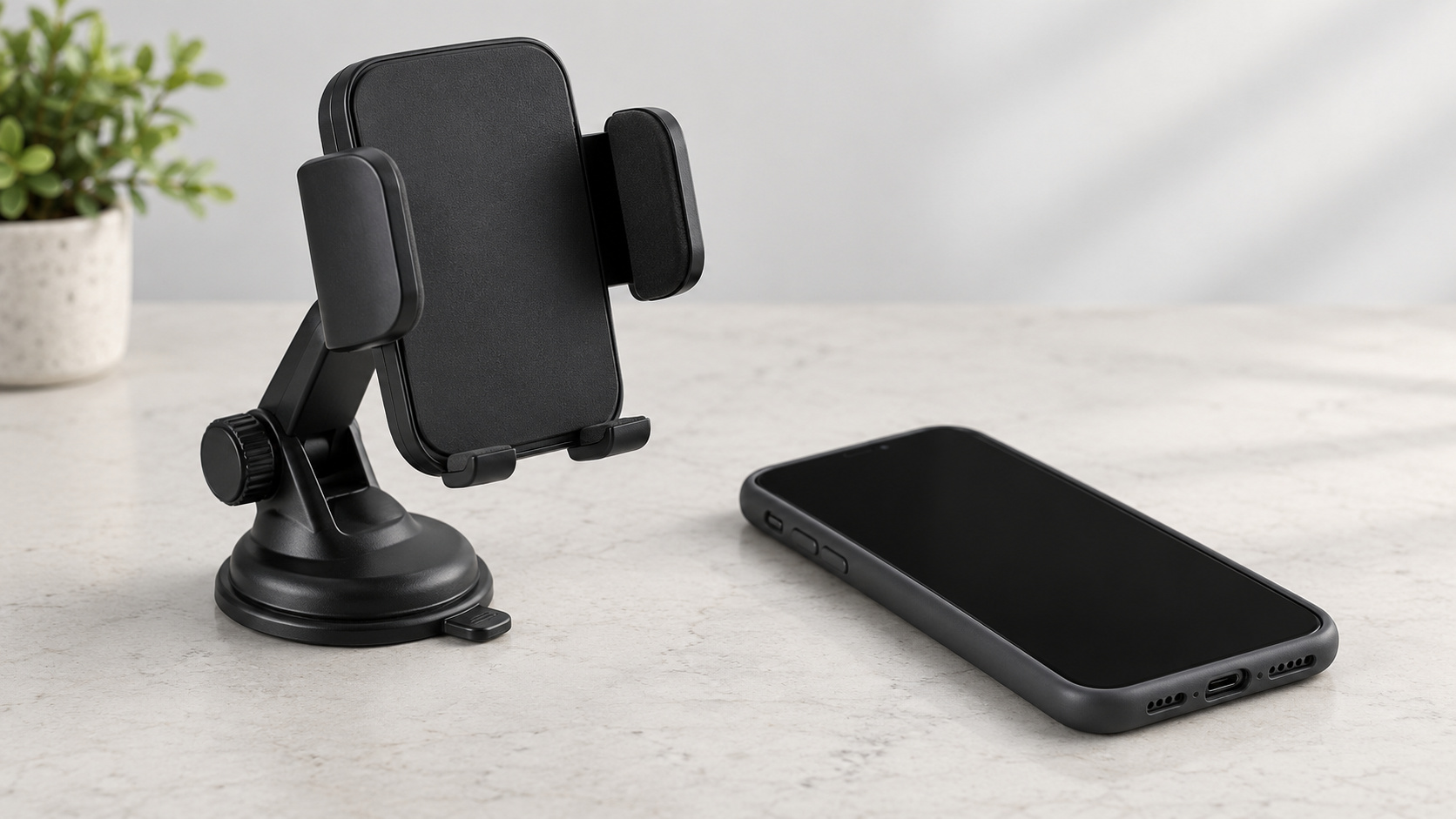
For a clamp-style car phone holder, I would ask which phone-and-case combination the buyer wanted assessed. The phone model alone would leave the case unresolved. I would put the intended combination on the sample request and ask the supplier which holder variant it was offering for review. The sample record would keep that variant's reference beside photographs of the supplied holder, rather than begin with a general claim that it fitted all phones.
I would ask for the holder's stated device-width and depth limits, where applicable to its design. RAM Mounts' published X-Grip information is an example of a manufacturer identifying width and depth ranges rather than only naming a screen size. I would not adopt its figures for a different supplier's product. For the offered holder, the supplier would need to explain the measurement references and provide the instructions for the exact design. The intended case would stay with the device dimensions sent for review.
During the agreed sample review, I would request views showing where the holder contacted the cased phone. A front view could be accompanied by side views of the jaws and lower supports, if fitted. I would want any contact with buttons, ports or raised case features visible in those photographs. If the case needed to be removed for the demonstrated arrangement, I would have that recorded as a different combination, not leave the original phone-and-case entry marked as checked.
The mounting parts would have a list of their own. I would ask whether the quotation covered only the phone cradle or included the arm, base and other specified pieces. If several bases were offered, each would keep its own reference and instructions. A photograph of a cradle on one base would not identify the contents of a pack supplied with another. I would request an open-pack view of the selected combination, with each included part visible and any optional part identified separately.
If the review found a difference from the approved reference, I would ask for a close photograph and a wider view locating it on the holder. I would keep the sampled pack identification with those images. For any adjustment included in the review, I would ask the inspector to name the instruction used and record the supplied parts involved. A part that needed modification would be returned as a question to the supplier, with no change made to the sample to obtain a fit. If retention or vibration performance was part of the order, I would ask the responsible specialist for the agreed assessment and its records, filing those separately from the stationary fit photographs.
For the order file, I would place the selected holder-and-base reference beside the cased-device review record and the agreed pack list. For a proposed change of jaw pads, I would ask which sample had the replacement pads and request the corresponding contact-point photographs. A changed base would get an open-pack view of its own. I would put those views beside the earlier ones for the buyer to review before updating the selected combination. In the retailer's product file, I would keep the exact phone and case references with that selected holder, so a later question about another case could begin with the combination actually reviewed.
Share the product, specifications, quantity and destination to discuss sourcing options.