


































Open the Hardware Bag During a Flat-Pack Cabinet Check
Check the packed cabinet against its own parts list and instruction revision, keeping missing, incorrect and damaged items separate in the inspection record.
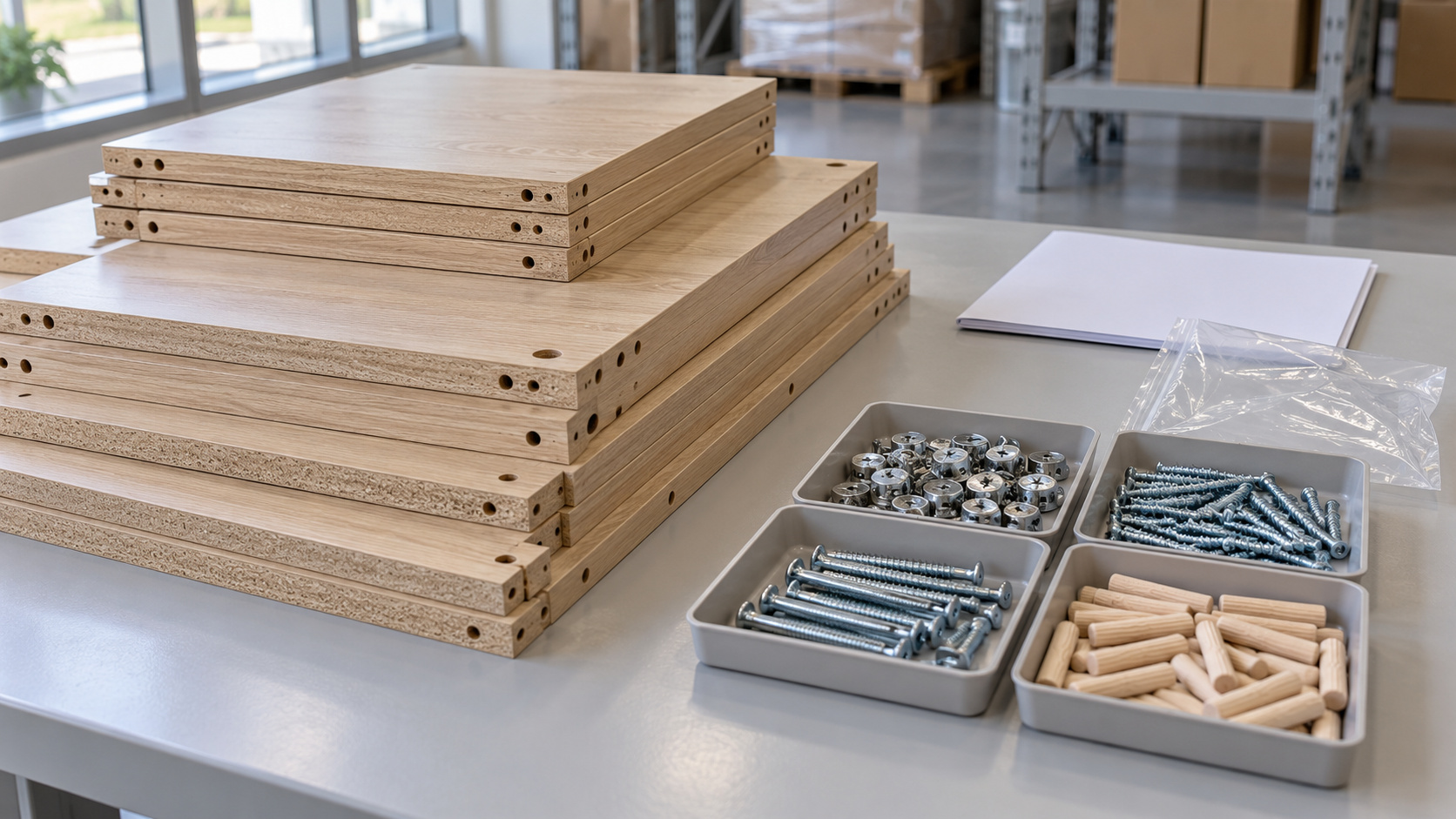
For a flat-pack storage cabinet inspection, I would ask the supplier to put the hardware bag on the inspection plan alongside the panels. A sealed bag can be present in the carton while its contents remain unchecked. Before the carton is opened, I would want the agreed parts list and the instruction revision available to the inspector. I would check the door and shelf options against those documents, so a contents count for one cabinet version was not applied to another.
Which cartons make one cabinet? I would put the supplier's answer at the top of the record. For a multi-carton version, opening just the panel carton could leave the hardware in another package. The inspector would need the set information before selecting a sample under the agreed plan. I would ask for each contents photograph to show its sampled-carton reference, with the other cartons in that cabinet set recorded alongside it. The plan would also state how much of that sampled set was to be checked.
I would read the fittings page before designing the count sheet. Does it give a reference for each screw, cam fitting and dowel? IKEA's spare-parts guidance points customers to component identification in its assembly instructions; for this enquiry, I would ask the offered cabinet's supplier for its own list. Each reference would get two quantity columns: required for the accepted configuration, and found in the sample. Deliberate spares would be named on another line. I would still record a shortfall of one fitting even if a different fitting had been packed in excess.
I would ask for photographs that keep similar fittings distinguishable. A row of short screws and a row of longer ones could be recorded beside their references with the measurement basis agreed in advance. Where a marking or drawing is needed to distinguish a fitting, that reference should accompany the observation. The inspector would record an uncertain identity as a question for review. Trying a plausible screw in a panel would not be my substitute for resolving its identity against the accepted documents.
For the panels, I would keep quantity, identity and condition as separate observations. The inspector could match panel references to the list and record visible edge damage, surface marks or packaging-related damage under the agreed criteria. If a door or shelf option changed, I would return to its parts list before accepting the count. The report would say which version had been opened. For a buyer also requesting an assembly assessment, I would leave a separate task for competent personnel to plan using the applicable instructions and precautions. Stability, loading and the intended installation would remain outside the conclusion of this contents record unless assessed through appropriate separate work.
The report would finish with distinct entries for a missing fitting, an incorrect fitting and a damaged item. I would ask the supplier to identify the proposed correction against each entry and show how any replacement pack would be labelled for the affected cabinet. Acceptance of the correction would be recorded before shipment release under the buyer's agreed process. The packing list and instruction version would remain with the report, so a later shortage enquiry could be traced to a specific sampled set and its documented contents.
Share the product, specifications, quantity and destination to discuss sourcing options.